
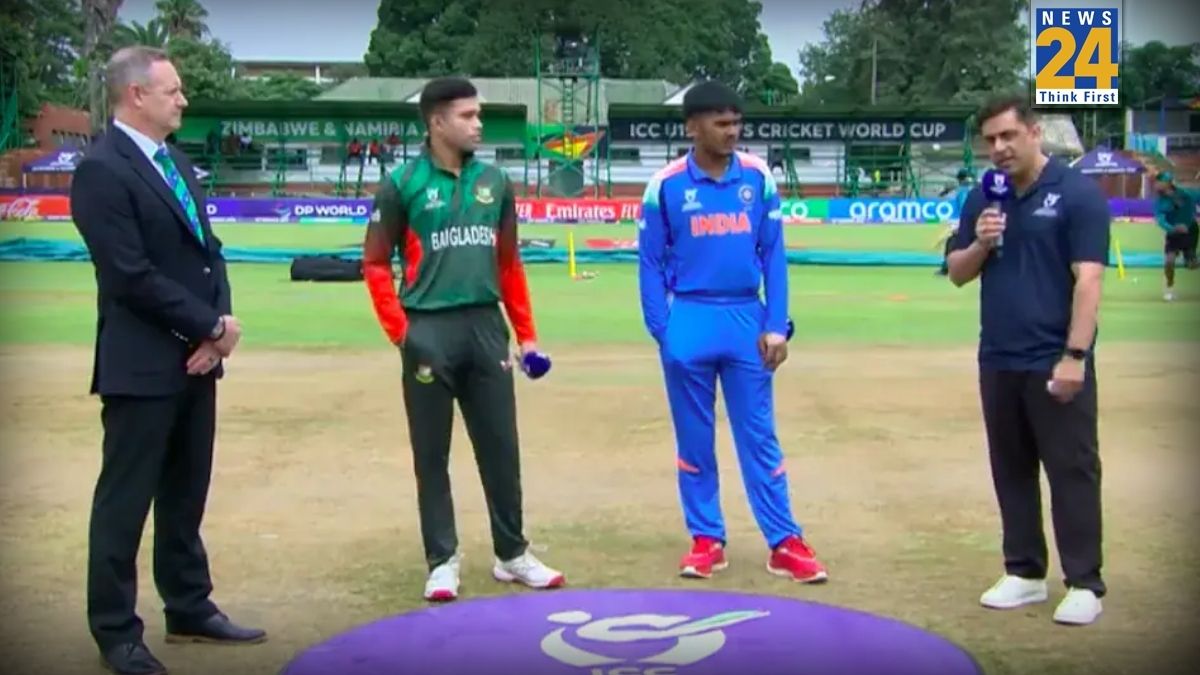
India’s Ayush Mhatre and Bangladesh’s Zawad Abrar skipped pre-match handshake amid ongoing tensions
The India vs Bangladesh clash at the Under-19 World Cup 2026 was always expected to be competitive. What few anticipated, however, was how much attention the moments before the first ball would draw.
As the two sides walked out for their Group A encounter in Bulawayo, a simple but telling gesture set the tone. India captain Ayush Mhatre and Bangladesh’s deputy Zawad Abrar skipped the customary pre-match handshake, a moment that instantly went viral and underlined the growing diplomatic and sporting strain between the two countries.
A small gesture with big meaning
In cricket, the handshake has long symbolised respect and sportsmanship, regardless of rivalry. Its absence on this occasion spoke louder than any statement. Fans across the world quickly picked up on it, linking the moment to similar scenes involving India during the 2025 Asia Cup and the Women’s World Cup, where Indian teams refrained from shaking hands with Pakistan amid ongoing political tensions.
What’s notable is that this stance now appears to have extended beyond Pakistan. Recent diplomatic disagreements between India and Bangladesh, combined with administrative friction between the BCCI and the Bangladesh Cricket Board, have added fuel to an already sensitive situation. Issues surrounding IPL player contracts and debates over venues for the upcoming T20 World Cup have only deepened the divide.
An unusual toss scenario
Adding another layer of intrigue was the toss itself. Bangladesh captain Azizul Hakim was named in the playing XI but did not walk out for the toss. Instead, vice-captain Zawad Abrar represented the team, a move that raised eyebrows but wasn’t officially explained.
After a rain delay that left the Bulawayo surface damp, Abrar won the toss and chose to bowl first. From a cricketing point of view, it was a logical call.
“We will field first. The wicket looks damp and we would like to take advantage for the first 10-15 overs,” Abrar said. “We’ve prepared well, we did well in the Asia Cup as well. We’ve got two all-rounders playing today.”
His comments were calm and measured, reflecting confidence in Bangladesh’s bowling unit despite the off-field noise.
India ready to adapt
On the other side, Ayush Mhatre admitted India would’ve preferred to bowl too but stressed that the team was prepared either way.
“We also would have bowled first, the wicket looks damp, but it’s OK,” Mhatre said. “The batting was a small concern, it was a small target and we should have chased it down for the loss of one or two wickets, but it’s ok. No changes for us.”
His words suggested a focus on learning and adaptability, key traits at an Under-19 World Cup while subtly acknowledging areas where India still need to improve.
When geopolitics meets youth cricket
What made the scene striking was the setting. This was an Under-19 World Cup match, a stage usually associated with development, learning, and fresh beginnings. Yet, the tensions mirrored those seen in senior international cricket, highlighting how broader political and administrative issues can filter down to even youth tournaments.
Once play began, the spotlight naturally shifted back to runs, wickets, and tactics. But the handshake that never happened ensured this match would be remembered for more than just cricket.
In many ways, it was a reminder that the game doesn’t exist in isolation. Even at the Under-19 level, cricket continues to reflect the realities of the world around it, sometimes in the most understated, but powerful, ways.