
Delhi-Meerut Namo Bharat RRTS to See 1.67 Lakh Daily Riders
[ad_1]
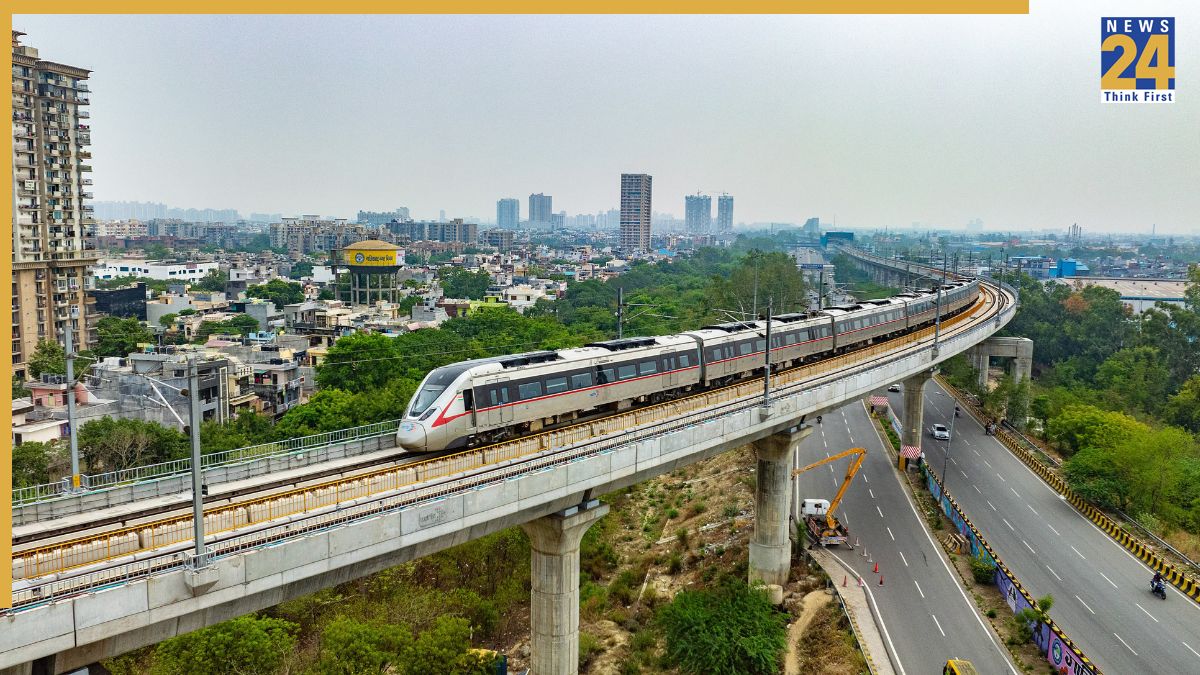
The much-anticipated Sarai Kale Khan–Meerut Namo Bharat Regional Rapid Transit System (RRTS) corridor is poised to redefine travel between Delhi and Meerut, with expected daily ridership reaching 1.67 lakh passengers once fully operational. Currently, 55 km of the 82.15-km corridor, from New Ashok Nagar to Meerut South, is already in service, offering commuters a faster and more convenient travel option.
Daily Ridership Forecast Highlights Growing Demand
Speaking in the Lok Sabha on Thursday, February 5, Tokhan Sahu, Minister of State for Housing and Urban Affairs, shared that the National Capital Region Transport Corporation Ltd. (NCRTC) anticipates a daily ridership of 1.67 lakh on the Sarai Kale Khan–Meerut stretch.
This robust number underscores the increasing demand for high-speed, reliable regional transport that can cut through the notorious traffic congestion of the National Capital Region (NCR).
Project Progress: Physical and Financial Milestones
The Delhi–Ghaziabad–Meerut Namo Bharat RRTS corridor, sanctioned in March 2019 by the Government of India, has made significant strides toward completion. According to the Minister:
- Length of corridor: 82.15 km
- Operational section: 55 km
- Physical progress as of December 31, 2025: 96.4%
- Financial progress as of December 31, 2025: 90.2%
These figures highlight the rapid pace at which the project has advanced, signaling an imminent full launch of the corridor in the near future.
A Leap Forward in Travel Time
Once fully operational, the Delhi–Meerut RRTS will enable trains to reach speeds of up to 180 km/h, cutting the travel time between Delhi and Meerut to under one hour, a sharp contrast to the current road journey that takes 1.5 to 2 hours.
Moreover, for daily commuters, this promises a dramatic improvement in convenience, reliability, and efficiency.
Integrating Regional Transport for Seamless Connectivity
The 2025-26 Economic Survey, presented by Union Finance Minister Nirmala Sitharaman, emphasized how the Namo Bharat RRTS has fostered integration across NCR transport networks. Also, at Sarai Kale Khan, commuters can seamlessly switch between metro rail, Indian Railways, buses, and paratransit services, creating a unified urban mobility experience.
A particularly innovative aspect of the project is its shared infrastructure with the Meerut Metro, which has generated capital cost savings of approximately ₹6,300 crore. Moreover this integration not only reduces project costs but also enhances last-mile connectivity, improves system viability, and maximizes returns on urban transport investments.
The Future of Commuting in NCR
The Delhi–Meerut RRTS is more than just a high-speed rail corridor, it represents a transformational shift in urban mobility. Additionaly, faster journeys, integrated transport options, and innovative infrastructure solutions are set to make daily commuting in NCR faster, smoother, and more efficient than ever before.
For residents of Delhi, Ghaziabad, and Meerut, the corridor promises not just convenience but a glimpse into the future of smart, sustainable regional transport.
[ad_2]