
Can BCCI stop Bangladesh’s match rescheduling? Indian government’s role explained in 5 Points
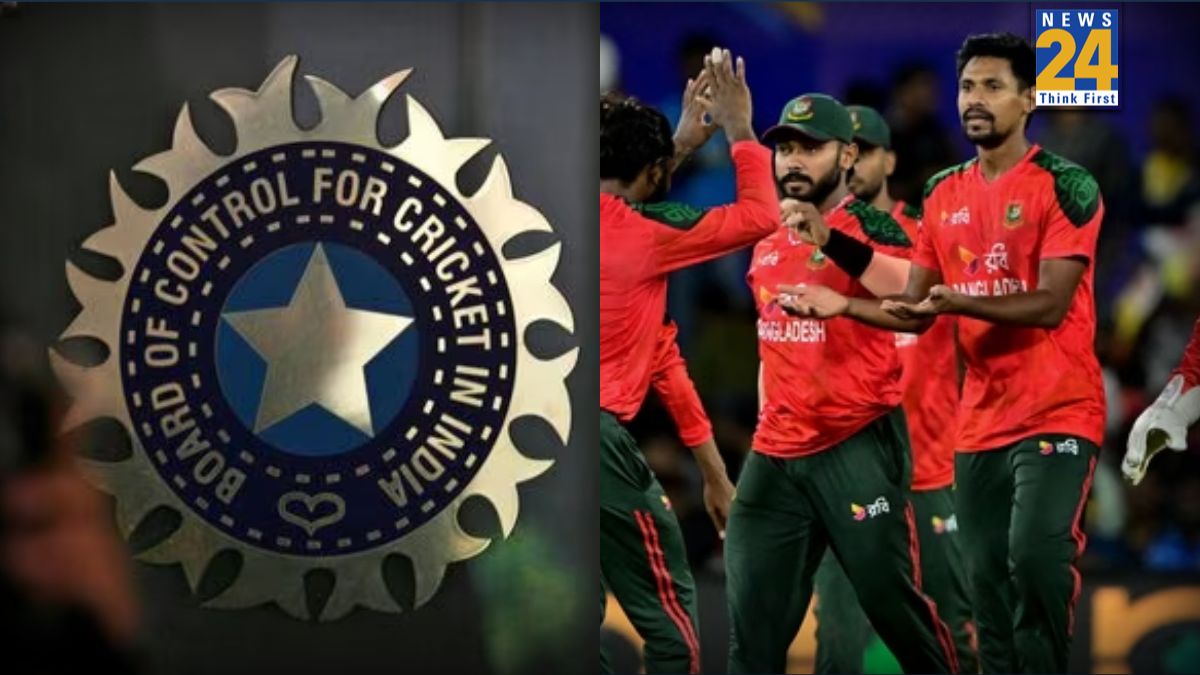
The ‘Mustafizur Row’ has officially gone well beyond IPL dugouts and dressing rooms. What began as a sudden and controversial contract termination has now spilled into the halls of government and it’s threatening to derail the 2026 T20 World Cup.
Bangladesh’s move to formally ask the ICC to shift their matches from India to Sri Lanka has put world cricket in a holding pattern. And while relocating a bilateral series is one thing, shifting World Cup fixtures mid-planning is an entirely different beast.
ICC Playing the Waiting Game
So far, the ICC has chosen silence over statements. Behind the scenes, though, the situation is heating up. Reports suggest ICC chairman Jay Shah has already been presented with revised schedule drafts, even as the governing body waits to make anything official.
A high-level meeting involving the ICC, BCCI, and Bangladesh Cricket Board (BCB) is expected in the coming days. The stakes couldn’t be higher. Agreeing to Bangladesh’s request would set a precedent that could haunt future tournaments. Rejecting it, on the other hand, risks one of Asia’s most passionate cricketing nations walking away from a global event.
How Much Power Does the BCCI Really Have?
As the primary host for the Indian leg of the tournament, the BCCI controls the operational backbone of the event. Stadiums, hotels, transport, ticketing, and security plans for cities like Kolkata and Mumbai are already locked in.
A last-minute venue change wouldn’t just be inconvenient, it would be expensive. Broadcasters, sponsors, and local authorities would all be forced to scramble, and the ripple effect would be felt across the tournament.
The BCCI’s likely argument is straightforward: India is already co-hosting the event with Sri Lanka, security assessments are in place, and “security concerns” can’t be selectively applied when logistics are this far down the road.
When Cricket Becomes Diplomacy
At this point, it’s no longer just a cricket issue. The Indian government’s position will carry enormous weight. Foreign policy and security assessments ultimately fall under the Ministry of External Affairs (MEA), and if the MEA certifies India as safe for international teams, the BCCI is unlikely to budge.
Recent diplomatic signals have been mixed. External Affairs Minister S. Jaishankar’s visit to Dhaka following the passing of former Bangladeshi Prime Minister Khaleda Zia was seen by some as a chance to ease tensions. But Bangladesh’s decision to ban IPL broadcasts suggests the interim government isn’t interested in symbolic gestures right now. This has turned into a delicate diplomatic chess match, one where every move is being watched.
The Domino Effect on Other Teams
If Bangladesh’s matches are shifted to Sri Lanka, the complications won’t stop there. Group C includes England, West Indies, Italy, and Nepal and all of them would be directly affected.
Traveling back and forth between India and Sri Lanka during a tight tournament window isn’t ideal. Recovery time suffers, training schedules get disrupted, and the competitive balance takes a hit.
And then there’s the fairness question. Other teams would almost certainly object to a mid-tournament venue switch that wasn’t part of the original agreement. The ICC would be opening a can of worms it might struggle to close.
The Forfeit Card Looms
In the 1996 and 2003 World Cups, teams that refused to travel due to security concerns didn’t get special accommodations, they lost points. Australia and West Indies both forfeited matches in Sri Lanka in 1996 under similar circumstances.
If the ICC determines that India is safe and Bangladesh still refuses to play, forfeiture or even disqualification becomes a very real possibility.
That said, Bangladesh will point to the elephant in the room: the hybrid model. With Pakistan already set to play all their matches in Sri Lanka, the BCB knows exceptions exist and they’re hoping that precedent works in their favor.
Where This Leaves the World Cup
Right now, the tournament is stuck in limbo. Every decision from here on out will shape how future World Cups are hosted, negotiated, and protected from political fallout.
What started as one IPL contract controversy has become a defining moment for global cricket governance. And unless cooler heads prevail soon, the 2026 T20 World Cup could become remembered not for the cricket but for everything that happened off the field.