
Real reason why Bangladesh were thrown out of T20 World Cup 2026 and how Scotland got the chance
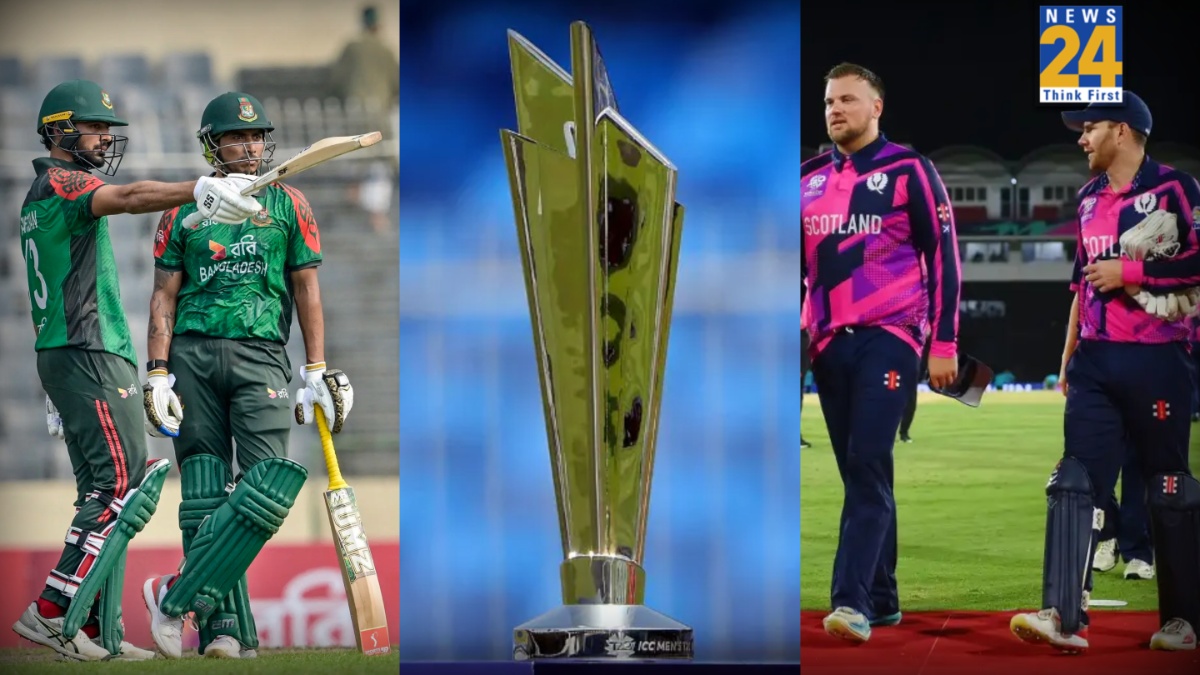
On Saturday, January 24, the world cricket body explained its decision to replace Bangladesh with Scotland for the 2026 T20 World Cup. They revealed that the Bangladesh Cricket Board (BCB) had asked to move the tournament from India to Sri Lanka due to safety worries. The BCB made it clear that they would not allow their players to travel to India for the competition.
Both sides talked for a long time to try and fix the problem. The situation got worse when the global cricket body refused to shift the original dates or locations. Since Bangladesh wouldn’t change their mind and formally quit the event, even a legal appeal couldn’t save their spot. Consequently, the organizers chose Scotland to fill the empty position.
What’s the reason? Why were Bangladesh thrown out of the T20 World Cup 2026?
The cricket council stated that they carefully checked the safety worries raised by Bangladesh regarding playing in India. Over the last twenty-one days, many meetings took place between both groups. The council also hired outside security professionals to do a private check. These experts found no real or proven danger for the players, staff or fans in India. Because of these findings, the organizers turned down Bangladesh’s requests.
The ICC has announced that Scotland will replace Bangladesh at the #T20WorldCup.
Details 📲 https://t.co/M61nOzx2fF
— ICC (@ICC) January 24, 2026
The cricket council mentioned that their business branch set a January 21 cutoff for Bangladesh to commit to the event. Since the board failed to reply by that date, the organizers officially chose Scotland to step in as the substitute team.
What were ICC’s statements?
“The decision follows an extensive process undertaken by the ICC to address concerns raised by the BCB regarding the hosting of its scheduled matches in India,” ICC’s statement reads.
“Over a period of more than three weeks, the ICC engaged with the BCB through multiple rounds of dialogue conducted in a transparent and constructive manner, including meetings held both via video conference and in-person.
“As part of this process, the ICC reviewed the concerns cited by the BCB, commissioned and considered independent security assessments from internal and external experts, and shared detailed security and operational plans covering federal and state arrangements, as well as enhanced and escalating security protocols for the event. These assurances were reiterated at several stages, including during discussions involving the ICC Business Corporation (IBC) Board.
“The ICC’s assessments concluded that there was no credible or verifiable security threat to the Bangladesh national team, officials or supporters in India.
“In light of these findings, and after careful consideration of the broader implications, the ICC determined that it was not appropriate to amend the published event schedule.
After a meeting on Wednesday, Bangladesh was given one day to confirm they would play in India as planned. When they missed that deadline, the ICC “proceeded in line with its established governance and qualification processes to identify a replacement team.”
How did Scotland get the chance?
The cricket council also explained that Scotland was the best-ranked team that hadn’t already made it into the competition. They are currently 14th in the world, which puts them ahead of nations like Namibia, Nepal and America. With this choice, Scotland will enter their sixth T20 World Cup, joining Group C to face England, the West Indies, Italy and Nepal.